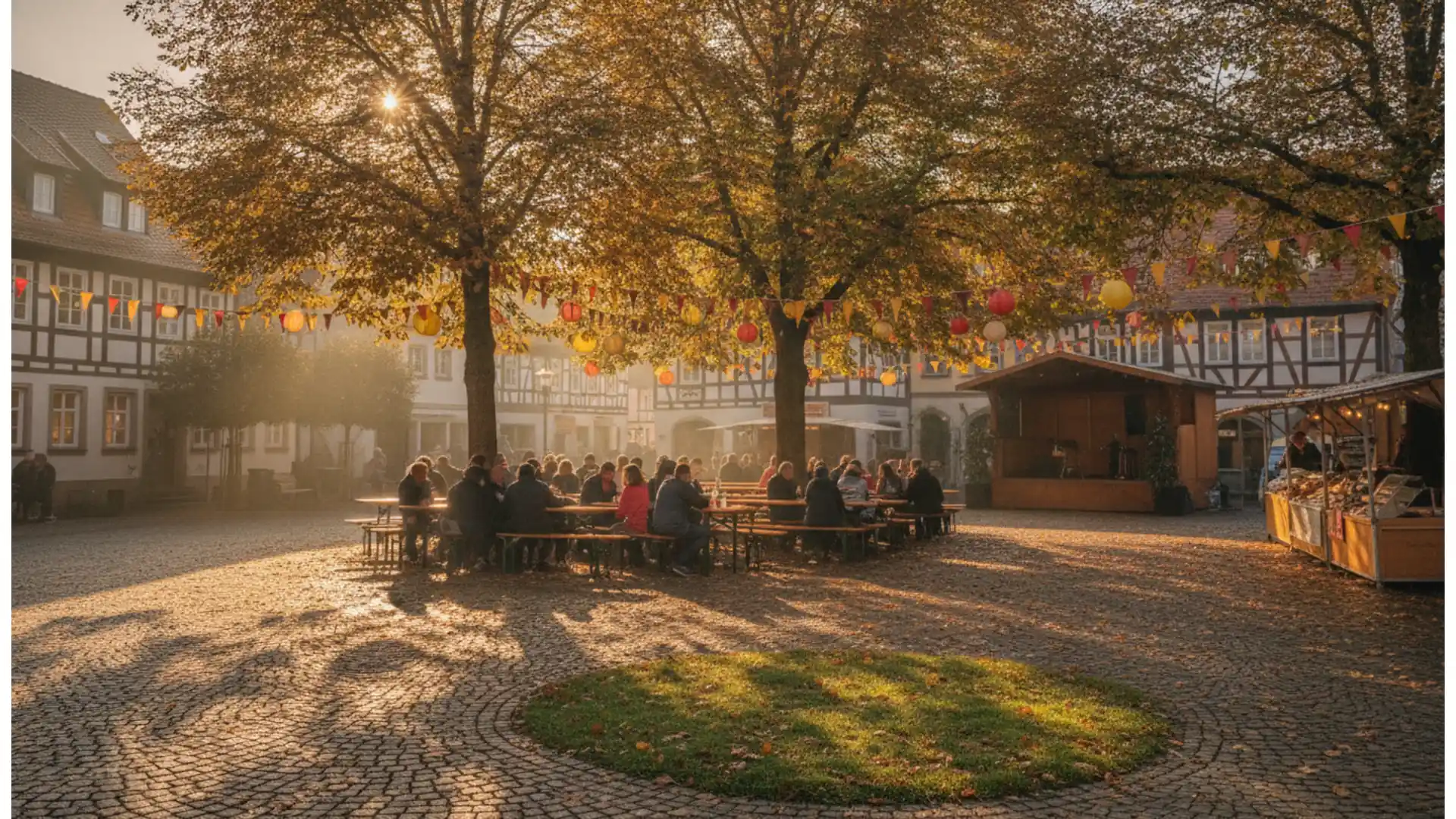
Events and festivals in Germany on the weekend of September 19-20, 2026: Munich's Oktoberfest opens with the traditional keg tapping, while the Wiesenmarkt in Lutherstadt Eisleben marks its 505th edition.
Autumn arrives with big festivities. In Munich, Oktoberfest opens this Saturday, September 19, 2026, on the Theresienwiese as the largest folk festival in the world, while in Saxony-Anhalt's Lutherstadt Eisleben, at the same time, the long-running Wiesenmarkt marks its 505th edition.
The Keg Tapping on the Theresienwiese
Munich's Oktoberfest opens this Saturday on the Theresienwiese, right in the heart of the Bavarian capital, where the vast grounds usually stay quiet the rest of the year. Locals simply call it the "Wiesn". For the rest of the world, it remains the largest folk festival anywhere and the emblem of Bavarian festival culture.
The keg tapping opens the 2026 edition on September 19 at noon. From that moment, the first beer flows. In the large tents, historic inns nearby recall the origins of the festival, and the atmosphere carries from tent to tent. Brass bands accompany the tapping, as tradition has dictated for generations.
Rides and showmen line the wide grounds between the tents. Carousels and roller coasters alternate with stalls serving Bavarian food, from pretzels to roast chicken, in the middle of the Wiesn crowds.
Every late summer, the usually quiet Theresienwiese turns this way into a vast festival ground with large beer tents, historic inns, rides and showmen. The 2026 edition stays open until October 4, sixteen days in all, before the tents come down and the meadow becomes a meadow again.
The Rest of the Weekend
The Wiesenmarkt is central Germany's largest folk festival. In Lutherstadt Eisleben, in Saxony-Anhalt's Mansfeld-Südharz district, it marks its 505th edition on Wiesenweg this year, with nearly 50 rides, around 1,000 participants in the traditional parade, a shooting contest, a beer tent, its own keg-tapping ritual and a 60-metre Ferris wheel. The Koblenzer SchängelMarkt is Rhineland-Palatinate's largest town festival. On the Rhine, as the high point of Koblenz's September calendar, it turns the whole city centre between Jesuitenplatz, Münzplatz, Am Plan and the old town into a festival mile with four stages, live bands, fashion shows, a crafts market and around 100,000 expected visitors.
The Kassel Marathon is northern Hesse's largest sporting event. Runners set off on the 20th edition, on an urban course through the documenta city, with a full marathon, half marathon, relay and mini-marathon plus a 21-kilometre walk from the start on Damaschkestraße, past Waldau, Wesertor, Nordholland, the town hall, the state theatre and the university, to the finish at the Auestadion. In Lower Saxony, the Wilscher Fun-Run in Gifhorn's district brings together a close-knit crowd of casual and competitive runners over ten kilometres, with well-organised aid stations along the course.
Ivo Van Hove leads the Ruhrtriennale one final time. In the Ruhr region, one of Europe's most important festivals for music theatre, dance and installation closes with 114 events across twelve venues in Bochum, Duisburg, Essen, Dortmund and Gladbeck, with five world premieres and nine German premieres this season. Most recently, Duisburg staged Marina Abramović's "Balkan Erotic Epic" at the Kraftzentrale in Landschaftspark Duisburg-Nord. In Essen, the festival also filled the UNESCO World Heritage site of Zeche Zollverein, above all PACT Zollverein, the NRW Choreographic Centre in its former boiler house. The Berliner Festspiele stage Musikfest Berlin. Together with the Stiftung Berliner Philharmoniker, it continues on Herbert-von-Karajan-Straße until September 23, with 36 events, around 40 concerts and 160 works marking the anniversary edition for the Berliner Festspiele's 75th year.
The Meissen Wine Festival is Saxony's largest wine festival. In Meissen, winemakers pour their vintages at one of the oldest dates on the porcelain city's calendar, across around 20 venues and stages between Roßmarkt and Domplatz on Hochuferstraße, with a festival meadow of showmen and rides by the Elbe. The Altstadtfest in Jena runs for ten days. From September 11 to 20, it fills the city centre around the market square and Eichplatz with live music, stage shows, rides and a specialty market. The Huttanz ranks among Germany's oldest circle-dance traditions. In the Swabian town of Geislingen, the district of Eybach dances it unbroken since 1648, when it was established as a peace celebration after the Thirty Years' War, because the town had been spared the worst devastation and the plague.